
Feeding the ADHD Brain: What My Son Taught Me About Food and ADHD
Updated: Jul 7
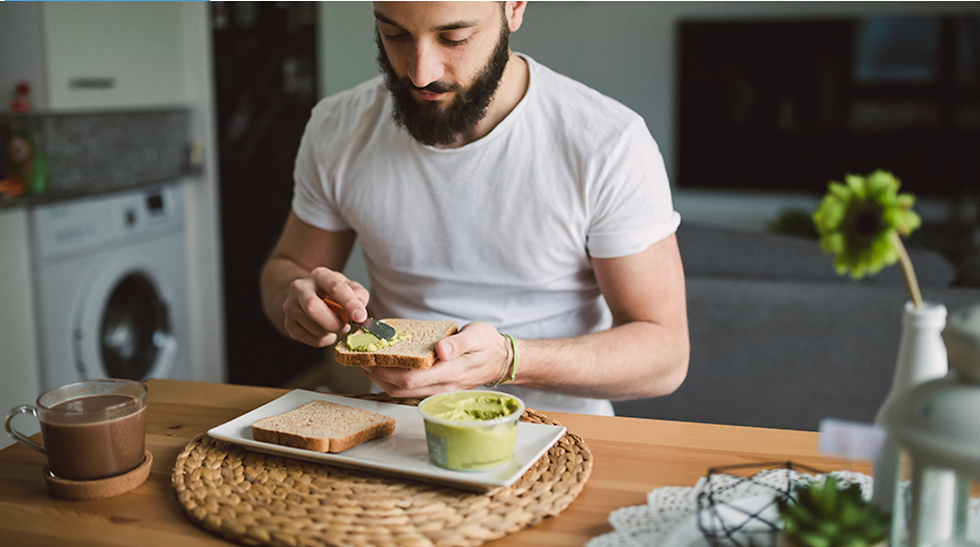
For many people with ADHD, eating well is not simply about knowing what foods are healthy. The harder part is following through consistently when the brain is wired to prioritize speed, stimulation, convenience, and immediate reward.
Many teens, university students, and adults with ADHD struggle with meal planning, grocery shopping, and maintaining consistent eating habits. Knowing what to eat is often not the problem. The challenge is finding foods that are easy enough to prepare and accessible enough to choose when energy, motivation, or executive functioning are running low.
As both a counsellor and a parent of a young adult with ADHD, I've seen this firsthand. My son recently started living on his own, and one thing we've been working on together is food. Like many people with ADHD, he often looks for quick calories and naturally gravitates toward sugar and caffeine when he's hungry, tired, or trying to stay focused.
What I've learned is that he does best when food is easy, visible, and requires very little effort. He's much more likely to grab a wrap, protein smoothie, yogurt, or leftovers he can eat with one hand than sit down and prepare a traditional meal. Instead of trying to force a system that doesn't fit how his brain works, we've focused on making nourishing foods quick, accessible, and easy to grab. The goal isn't perfection; it's creating an environment where the healthier choice becomes the easier choice.
ADHD brains often crave foods that are quick and easy because those foods provide fast dopamine and require very little mental effort. Drive-thru meals, sugary drinks, chips, candy, and convenience foods all offer something the ADHD brain naturally seeks: instant satisfaction. The problem is that these foods can also create sharp energy spikes followed by crashes that may make focus, emotional regulation, irritability, and impulsivity even harder to manage.
Many people with ADHD find themselves stuck in a frustrating cycle: forgetting to eat, becoming overly hungry, grabbing whatever is fastest, and then crashing later. By the end of the day, exhaustion and decision fatigue can make cooking feel impossible.
These patterns are often connected to the executive functioning difficulties and impulsivity that many adults with ADHD experience. If you'd like to learn more, check out our article, Navigating Life with Adult ADHD.
The good news is that healthy eating for ADHD does not need to involve rigid meal plans, complicated recipes, or hours of meal prep. In fact, simpler usually works better.
The most effective ADHD-friendly eating strategies are often the ones that reduce effort rather than increase discipline. Instead of trying to force an ADHD brain to become highly organized around food, it helps to work with how the brain naturally functions by making nourishing foods easier to access, prepare, and eat.
Protein-rich foods can make a surprisingly big difference because they help provide more stable energy and support dopamine production. Keeping foods like Greek yogurt, eggs, cheese, protein smoothies, nuts, turkey slices, peanut butter, or hummus readily available can make it easier to reach for something nourishing before hunger turns into impulsive eating.
Many ADHD brains also do well with "assembled meals" rather than traditional cooking. A plate with crackers, cheese, fruit, hummus, and nuts may not look like a formal dinner, but it still provides nutrition without requiring multiple steps, dishes, or planning.
Convenience matters more than people realize. If healthy foods require too much preparation or cleanup, the ADHD brain will often default to the fastest option available. That isn't laziness; it's often a reflection of executive functioning challenges and decision fatigue.
This is why wraps, smoothies, rice bowls, handheld foods, and simple one-pan meals tend to work well. They reduce friction, which increases the likelihood that the meal actually gets made.
Another important piece is understanding that impulsive snacking is not always about hunger. Sometimes the brain is looking for stimulation, comfort, stress relief, or a quick burst of energy. Sugar and processed foods can provide that temporarily, which is why cravings often feel so strong.
The relationship between sugar, mood, and emotional regulation is something many families notice firsthand. If you'd like to learn more, you can read our article, The Halloween Sugar Rush: How Candy Affects Mood and Anxiety.
Rather than relying entirely on willpower, it can help to make nourishing choices more visible and convenient. Something as simple as washed berries, hard-boiled eggs, cheese strings, trail mix, or protein bars can reduce the likelihood of reaching for quick sugar every time energy dips.
ADHD-Friendly Food Strategies
Keep grab-and-go protein options visible
Prep ingredients instead of full meals
Use frozen fruits and vegetables to reduce effort and waste
Pair carbohydrates with protein to reduce energy crashes
Eat something before becoming overly hungry
Choose foods that require minimal preparation and cleanup
It can also help to rethink what a "proper meal" needs to look like. A smoothie may work better than skipping breakfast. A wrap may be more realistic than cooking an elaborate lunch. ADHD-friendly eating is often less about perfection and more about sustainability.
Most importantly, let go of all-or-nothing thinking. Sustainable nutrition is not about eating perfectly. It is about building systems that support your brain more consistently.
Small, realistic changes; especially ones that reduce effort and increase accessibility, often make a much bigger difference over time than restrictive diets or rigid meal plans ever will.
Advance Counselling offers in-person counselling and walk-and-talk counselling in North Vancouver, as well as secure online counselling across British Columbia, Manitoba, Saskatchewan, Yukon, and the Northwest Territories.
This article was written by Ashleigh Gold, MA, RCC, co-owner of Advance Counselling. Ashleigh and co-owner Natasha Chalke provide compassionate, evidence-based counselling for couples, adults, teens, and families navigating anxiety, ADHD, trauma, relationship challenges, parenting, co-parenting, and life transitions.


Comments